The training pathway
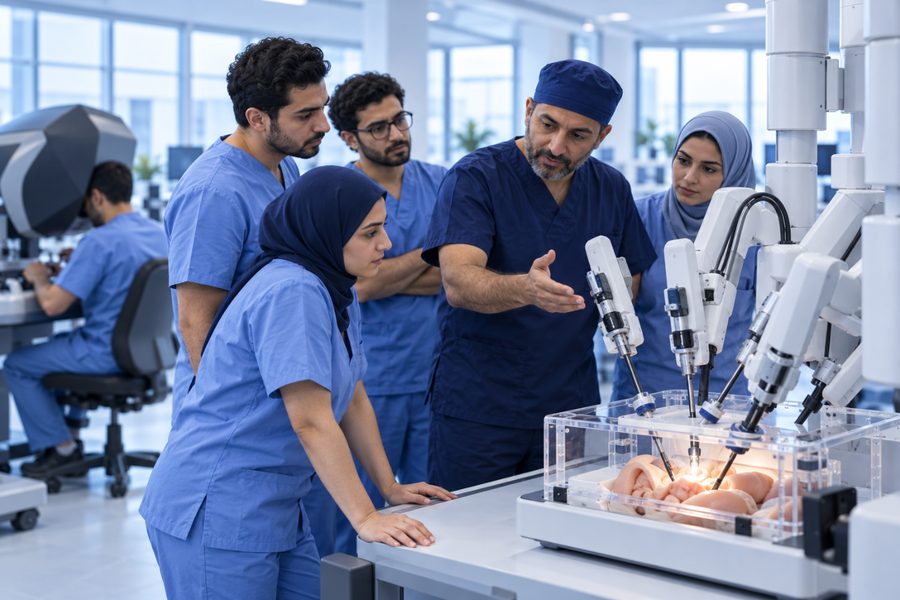
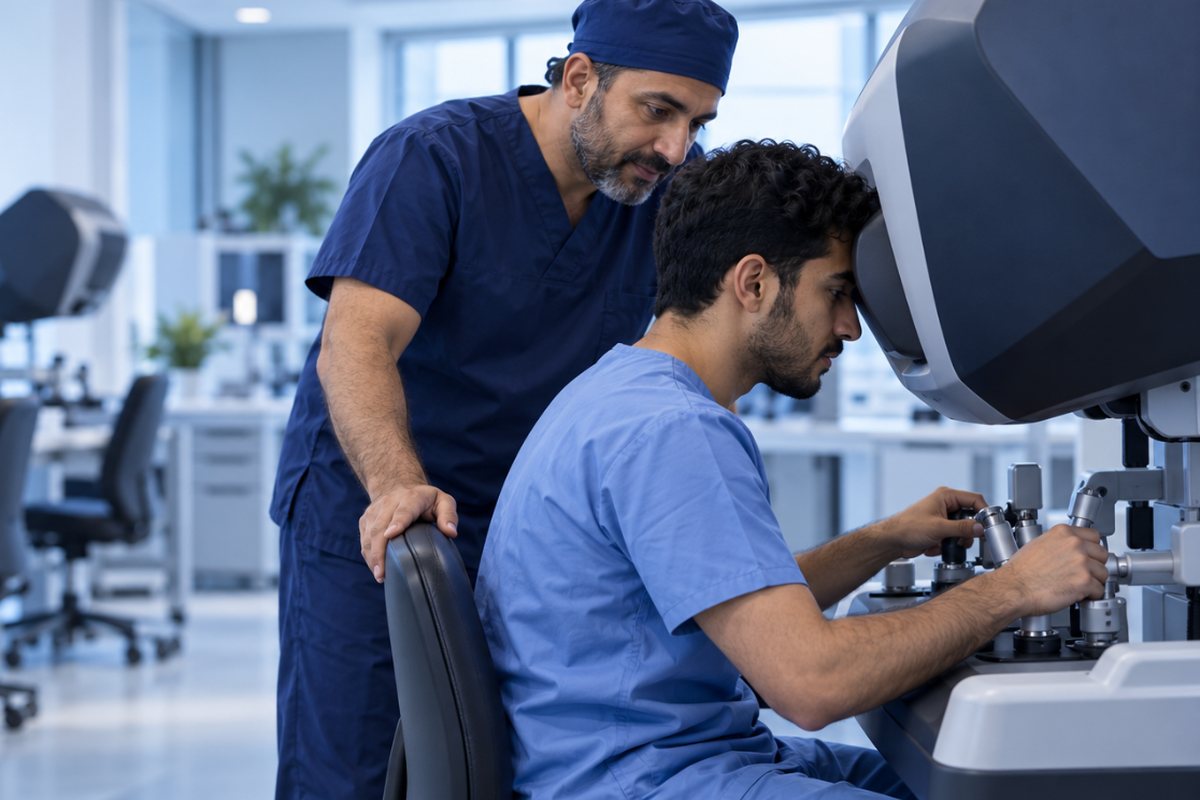
Each surgeon moves through the stages at their own pace, with experienced robotic surgeons guiding them along the way.
- 1
Simulation
Virtual-reality simulator modules to learn the console controls, camera handling, energy use and basic tasks, with scores to track progress.
- 2
Dry lab and wet lab
Hands-on practice on the robotic system with inanimate and tissue models: docking, port placement, suturing and dissection. See the workshops.
- 3
Bedside assistance
Working at the patient side in real cases: docking, instrument exchange, troubleshooting and clear communication with the console surgeon.
- 4
Proctored console cases
Performing the console part of selected cases under the supervision of an experienced proctor, starting with simpler steps.
- 5
Independent practice
Operating independently, with continued review of outcomes through the national registry.
Coming soon. The board will publish the requirements for each stage and the criteria for ESRS certification.
Training for theatre teams
Robotic surgery is a team procedure. ESRS courses also train theatre nurses, anaesthetists, biomedical engineers and robotic coordinators in docking, instrument handling, emergency undocking and team communication.
Proctoring programme
A network of experienced robotic surgeons who supervise colleagues during their first console cases in their own hospitals.
Coming soon. Details of the programme and how to become a proctor will be announced to members.
Fellowships and scholarships
Support for young surgeons to train in high-volume robotic centres in Egypt and abroad.
Coming soon. Calls for applications will be sent to members first.